
A lid that appears well sealed in a first sample is not automatically ready for mass production. The real package must maintain seal performance through filling, cooling, stacking, transport and the intended consumer opening action. It must also run consistently on the customer’s packaging line.
This is why food cup lid development should include a practical validation plan before production approval. The goal is not to produce one perfect sample; it is to understand whether the cup, lid structure and production conditions have a stable operating window.
Start with the finished package system
Testing a flat piece of lidding material is useful for early material checks, but it cannot fully predict performance on a filled cup. The test sample should represent the real system:
- The intended cup, bowl or tray
- The actual rim material or coating
- The selected lid structure and printed version where relevant
- The intended filling condition
- Realistic sealing equipment and process settings
- Expected storage, transport and consumer-use conditions
The cup body and the sealing surface may not be the same material. A paper cup can have a PE, PP or another coating at the rim. For this reason, cup samples and substrate information are essential before seal results can be compared.
1. Seal-strength testing: does the lid hold where it should?
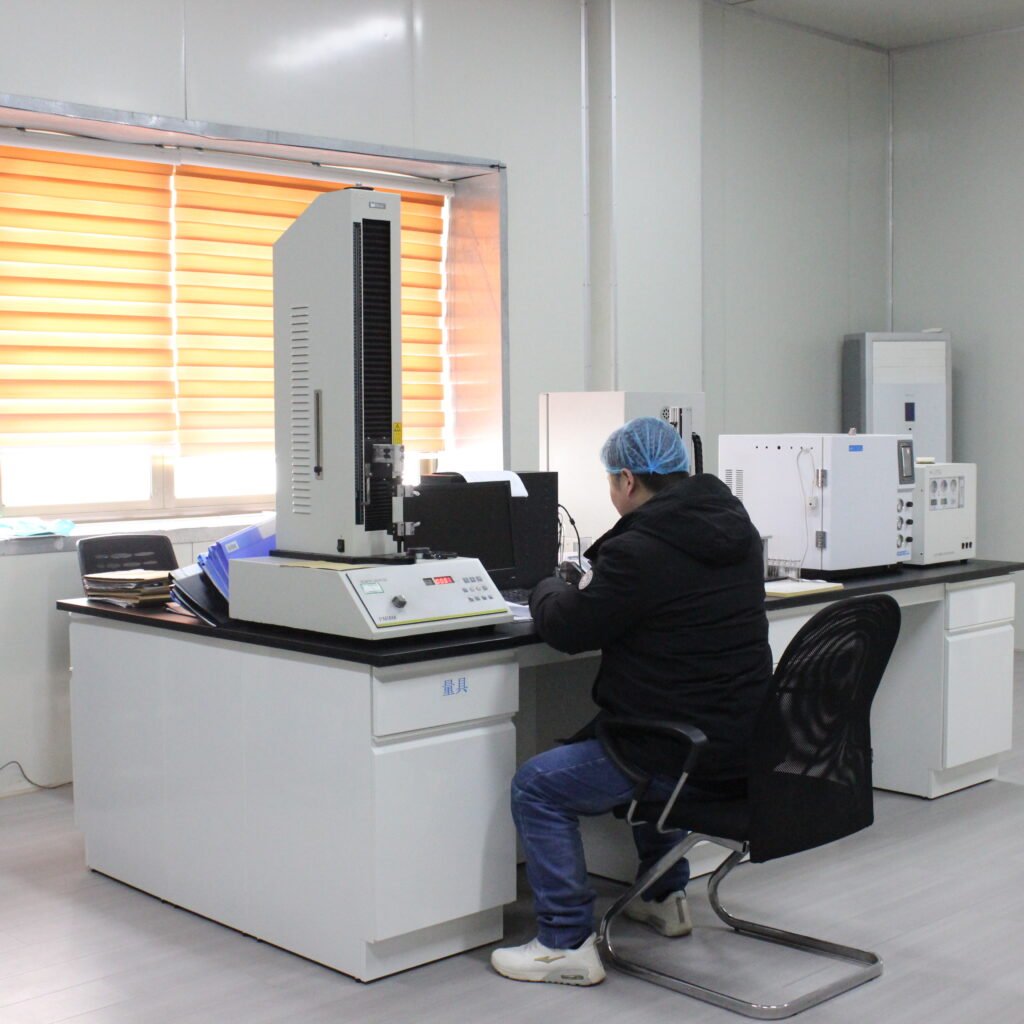
Seal strength measures the force required to separate a sealed lid from its container or opposing film. The number alone is not enough. It is also important to observe how the seal fails.
A controlled peel may be the intended result for a yogurt or sauce cup. In another application, a stronger seal may be required because the package is opened through a separate feature. A test should therefore document the failure mode as well as the measured force.
When comparing samples, keep the specimen width, peel angle, test speed, conditioning time and test method consistent. Results taken under different conditions should not be treated as directly comparable.
2. Peel-force testing: can the consumer open it as intended?
For easy-peel lids, the opening force should match the product experience. A lid that is too difficult to peel can splash the product, deform the cup or frustrate the user. A lid that opens too easily can create handling concerns during storage or transport.
Evaluate the complete opening sequence:
- Can the consumer find and grip the tab?
- Does the lid peel smoothly around the rim?
- Does the intended opening path remain controlled?
- Is the rim acceptably clean after opening?
- Does the opening feel consistent after storage?
The target differs by application. A chilled dairy lid, a sauce cup lid and an instant-food lid may require different opening behavior. See Easy Peel vs. Easy Tear Lids for Yogurt and Sauce Cups for the difference between those two opening requirements.
3. Leak and integrity checks: can the package survive handling?
A seal can look continuous but still contain channels, wrinkles or local weak points. Leak and integrity checks help identify these risks before a full production run.
The test method should fit the package and product. Depending on the application, an evaluation may include visual inspection, inversion, controlled compression, vacuum-based checks or handling simulation. Test the package after filling and after the storage conditions that matter for the product.
Common warning signs include:
- Wetness or residue around the cup flange
- Uneven seal appearance
- Local lift at the rim edge
- Leakage after inversion or stacking
- Product contamination at the seal interface
When a sample fails, avoid changing every machine setting at once. Adjust one controlled factor, record it and compare the new result with the original sample.
4. Hot performance: what happens before the seal is fully cooled?
Some packaging lines place stress on a newly sealed cup before the seal has completely cooled and stabilized. This can happen through immediate conveying, stacking or filling-line handling. The seal’s resistance during this early period is often described as hot tack.
If hot performance is relevant, include it in the validation plan. A seal that performs well after full cooling may behave differently when the cup is moved quickly through the line.
The result can be affected by dwell time, sealing energy, pressure distribution, cup support and the selected seal-layer structure. The aim is a stable process range, not simply the highest possible machine temperature.
5. Run a real-line trial before approving mass production
Laboratory and sample checks should be followed by a production-relevant trial. Use the expected line speed and observe the complete process: feeding, registration, sealing, cutting or placement, cooling and packing.
For rollstock applications, check web tracking, print registration and cutting consistency. For pre-cut lids, check lid orientation, pick-and-place performance, stack separation and magazine feeding. Read Rollstock Lidding Film vs. Pre-Cut Die-Cut Lids to compare those supply formats.
A practical validation checklist
Before releasing a food cup lid, confirm:
- The lid seals to the actual container-rim interface.
- Seal strength and failure mode meet the intended package use.
- Peel force and opening experience match the consumer requirement.
- The filled pack remains intact through realistic storage and handling.
- The lid performs while hot if the packaging line applies early stress.
- Feeding, placement, registration and sealing are stable at the intended line speed.
- Every test sample is traceable to its cup, lid, process setting and test condition.
What to send before a validation discussion
Provide a cup or bowl sample, current lid sample if available, product description, filling conditions, production-line details, expected storage and transport conditions, and the required opening behavior. If there is an existing quality problem, send both good and failed packs from the same run.
HYPack develops custom die-cut food lids, heat-sealing film and composite film rolls. A structured test plan helps move from an attractive sample to a production-ready packaging solution.
 Chinese
 English