
A machine display reading 180°C does not mean the seal interface ever reaches 180°C. Heat must travel through the film and any outer layers while the package is moving, the jaw is opening and the product may be cooling the container from below. This is why two lines showing the same set point can produce very different seals.
Heat sealing film is designed to form a bond under a controlled combination of heat, pressure and time. It may close a cup, become the inner layer of a laminate or seal one flexible web to another. Understanding the process is more useful than memorizing a “recommended temperature.”
First identify what is being sealed to what
The phrase covers several different jobs:
- Cup and tray lidding
- Sachets and pouches
- Flow-wrap and form-fill-seal packs
- Composite film laminates
- Dairy, beverage and ready-meal packaging
- Dry-food and powder packaging
- Medical or personal-care packaging where an application-specific structure is validated
A pouch seal may join the film to itself. A cup lid bonds to a rigid flange. A lamination film may only provide the sealant layer beneath another printed web. Treating these as interchangeable is a common source of vague quotations and poor trials.
What happens in the fraction of a second under the jaw?
A heat seal is formed in several stages.
1. Heat reaches the seal interface
The sealing jaw or head transfers energy through the outer layers of the film. The seal layer must reach a temperature at which it becomes tacky or molten enough to bond.
2. Pressure brings the surfaces together
Pressure creates intimate contact and helps the softened seal material wet the opposing surface. Uneven pressure can create channels or partial seals even if the set temperature appears correct.
3. Dwell time allows the bond to form
The materials must remain under heat and pressure long enough for the interface to develop. Faster lines usually provide less dwell time, so the material may need a broader or lower-temperature sealing window.
4. The seal cools and stabilizes
The newly formed bond can be vulnerable while hot. If the package is pulled, filled, stacked or stressed too early, the seal may open before reaching its final strength. This early performance is often described as hot tack.
Film names do not tell the whole story
A heat sealing film may be a single-layer film, a coextruded film, a coated film or one layer within a laminate.
Functional layers can include:
- Outer or print layer: supports printing, heat resistance and mechanical strength.
- Barrier layer: reduces transmission of oxygen, moisture, aroma or light as required.
- Tie or adhesive layer: bonds materials with different properties.
- Seal layer: creates the final bond to the package surface.
Common seal-layer families include polyethylene-based and polypropylene-based materials, along with application-specific copolymers, ionomers and heat-seal coatings. The right choice depends on substrate compatibility, seal initiation temperature, peel behavior, product resistance and regulatory needs.
“LDPE,” “LLDPE” or “CPP” helps identify a material family, but it does not predict the finished seal by itself. Resin grade, blends, additives, layer thickness and processing history change how the film starts to seal, how it peels and how it behaves while hot.
The number worth buying is the process window
The seal initiation temperature is the point where a useful bond begins under a stated test method. Without the substrate, pressure and dwell time, that number is incomplete.
The sealing window is more useful: it is the range that produces acceptable seals without distortion, burn-through, excessive shrinkage or difficult opening. Wider operating room usually means fewer surprises when speed or ambient conditions change.
When comparing films, ask for the test conditions behind the data. A neat curve generated on the wrong substrate may have little value on your line.
Substrate compatibility is specific
Heat sealing film can be engineered for surfaces such as:
- PE and PE-coated materials
- PP
- PS
- PET and selected PET-based trays or cups
- Coated paperboard
- Aluminum and other coated metal surfaces
- Another flexible film web
The film must be developed for the actual contact surface. For example, a film that seals well to PP may not seal reliably to untreated PET. A paper cup may be described as “paper,” but the sealing interface could actually be PE, PP or another coating.
Send substrate specifications and physical samples whenever possible.
“Easy peel” and “easy tear” are different requests
Heat seals can be designed for different opening behaviors.
Peelable seal
A peelable seal opens at the interface or within a controlled layer when the consumer pulls the lid or web. The package should remain secure during distribution while opening smoothly at the point of use.
Permanent or weld seal
A permanent seal is intended to resist separation. It may be used where the package is opened by cutting, tearing at a separate feature or another mechanism.
Easy-tear construction
Easy tear describes how the film propagates a tear after initiation. It is related to, but different from, peelability. A package may peel from a tray but be difficult to tear through, or it may tear easily while having a strong flange seal.
In an RFQ, describe what the consumer actually does: peel a tab from a cup, tear across a pouch, puncture a membrane or cut the pack. This avoids using “easy open” as a catch-all term.
Four settings, one result
Temperature
Too little heat can cause weak or incomplete seals. Too much heat can distort the film or container, squeeze sealant away from the interface, damage inks or coatings and narrow process control.
Pressure
Insufficient or uneven pressure can leave channels. Excessive pressure may thin the seal area, mark the package or increase sensitivity to flange defects.
Dwell time
Short dwell time may not transfer enough heat. Long dwell time can reduce output and expose the package to unnecessary thermal stress.
Surface condition
Oil, powder, product splash, moisture, wrinkles and flange damage can interrupt the seal. If contamination is unavoidable, the packaging system needs to be evaluated under that realistic condition.
Machine speed, jaw design, temperature calibration and cooling also influence the result.
Troubleshooting from the failed seal
| Problem | Factors to investigate |
|---|---|
| Seal does not form | Incompatible seal layer, low interface temperature, short dwell time, insufficient pressure or contaminated surface |
| Seal is strong in one area and weak in another | Uneven flange, jaw misalignment, pressure distribution, wrinkles or temperature variation |
| Seal opens while still hot | Inadequate hot tack, early package stress, excessive fill load or insufficient cooling |
| Film sticks to the sealing head | Excessive temperature, damaged non-stick surface, unsuitable outer layer or coating transfer |
| Container flange deforms | Excessive heat/pressure, long dwell time, thin flange or poor mechanical support |
| Peel force is too high | Seal system mismatch, high sealing energy, excessive pressure or unsuitable peel design |
| Leaks appear after transport | Seal channels, flex cracking, puncture, impact or inadequate package support |
Change one controlled variable at a time and label every sample. If temperature, pressure and dwell time all move together, a better-looking seal will not tell you which change mattered.
How to brief a film supplier
Define the package interface
Identify both surfaces being sealed. Include resin family, coatings, treatments and supplier information.
Define product exposure
State whether the film will contact fat, acid, salt, alcohol, aroma compounds, powder or moisture. Include filling temperature and later heat treatment.
Define required performance
Set targets for seal integrity, peel behavior, hot tack, puncture resistance, barrier, clarity, stiffness and tear.
Define the production process
Provide line type, speed, jaw design, temperature range, pressure, dwell time, cooling and any cutting operation.
Define the supply format
For rolls, specify width, thickness or basis, core, maximum reel diameter, winding direction, print repeat and registration. For pre-cut lids, provide a dimensioned drawing and feeding requirements.
A small test matrix beats one perfect sample
Begin with a compact matrix of temperatures and, where possible, more than one dwell time. The aim is to see the shape of the operating window before spending time on a full production trial.
- Material inspection: confirm thickness, dimensions, appearance and treatment.
- Seal-window study: seal samples across a planned range of temperatures, pressures and dwell times.
- Seal-strength or peel test: compare force and failure mode, not only the highest value.
- Leak or integrity test: select a method appropriate for the package and product.
- Hot-tack assessment: evaluate seal resistance before complete cooling if the line stresses hot seals.
- Machine trial: run the film at intended speed and observe feeding, tracking, sealing and cutting.
- Filled-pack validation: complete distribution, storage and shelf-life checks.
Record how every value was produced. A peel-force result without specimen width, peel angle, test speed and conditioning method cannot be compared reliably six months later.
Information that prevents a generic sample
Include the following in the first message:
- Package type and packed product
- Exact sealing substrate
- Film role: standalone web, lidding layer or lamination component
- Current film structure, if available
- Filling and heat-treatment conditions
- Machine model and target line speed
- Seal temperature, pressure and dwell-time range
- Peel or permanent-seal requirement
- Barrier, clarity, print and thickness requirements
- Reel dimensions and winding direction
- Food-contact market and test needs
- Current defect and representative samples
Common misconceptions
Is heat sealing film the same as shrink film?
No. Heat sealing film is designed to form a bond at a seal interface. Shrink film is designed to contract when heated. A material can have both functions, but the terms describe different behaviors.
Does a higher sealing temperature create a stronger seal?
Not always. Seal strength may increase only to a certain point. Excessive heat can distort the package, damage coatings or squeeze sealant away from the interface. The goal is a stable operating window, not the highest possible temperature.
Why does the same film behave differently on two machines?
Jaw geometry, calibration, pressure, dwell time, line speed, cooling and web tension may differ. Compare actual interface conditions rather than the displayed temperature alone.
Can one heat sealing film work on PP, PS, PET and PE?
Some specially designed seal systems cover multiple substrates, but performance must be verified on each production container. Do not assume universal compatibility from a general product name.
Start with a failed pack or a real substrate
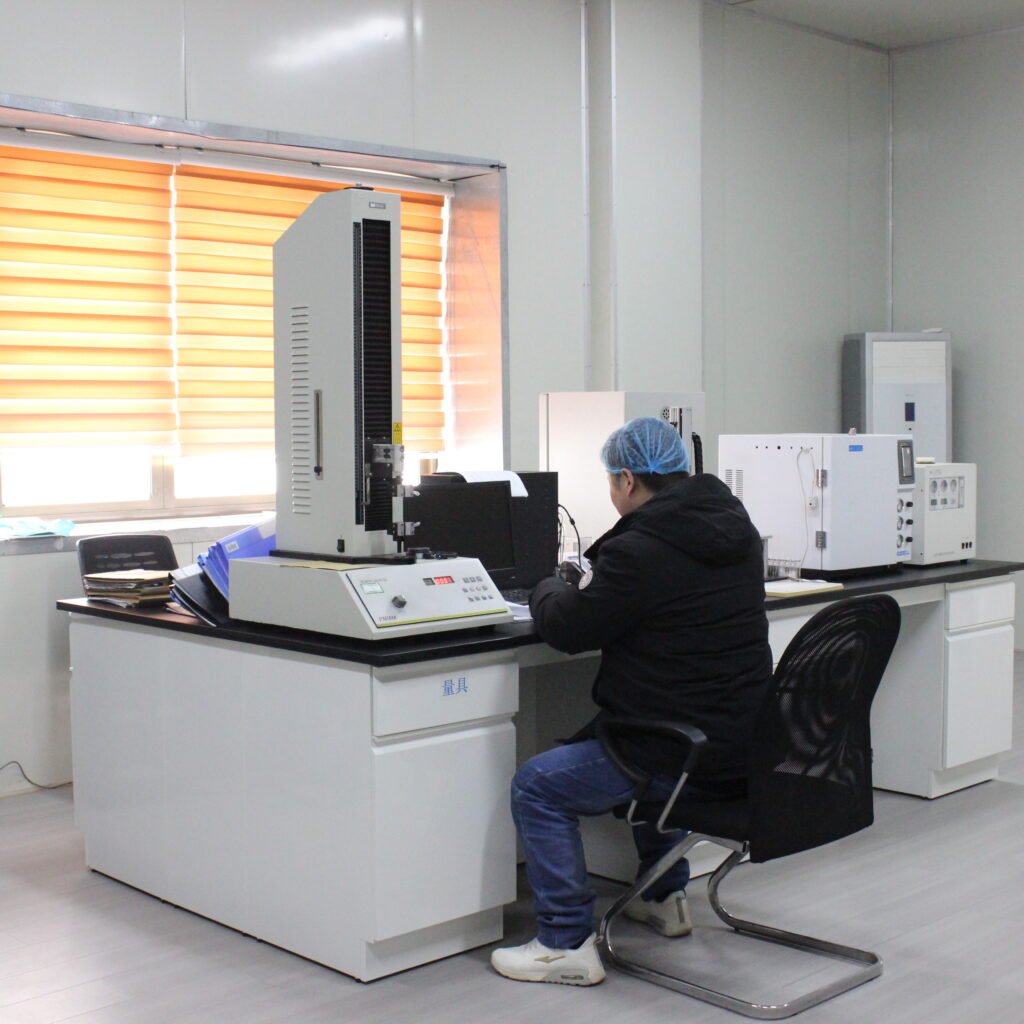
Hengyu Packaging supplies customizable heat-sealing film and composite packaging structures for food cups, containers and other applications. Its available test capabilities include heat-seal simulation, tensile, puncture and related packaging-performance evaluation. If you are solving a failure, send both good and bad packs from the same run together with the recorded line settings; the contrast is often more informative than a photograph alone.
View our custom heat sealing film or contact Hengyu Packaging with your substrate samples, machine conditions and target seal performance.
 English
  Chinese